The used luxury market is the set of two- and three-year-old premium cars whose first owners already paid the steep part of depreciation. If you're in the market for a serious car — something with real performance, real luxury, or both — the comparison worth making is used against new, not sticker against sticker.
Why can a used luxury car cost about as much as a new mainstream car?
Because the first owner already paid the early depreciation, a two-year-old premium car can sit near the price of a new mainstream one. The average transaction price for a new vehicle in the U.S. hit $48,000 in 2025. That means the average new car now costs nearly as much as a lightly used Porsche Macan, BMW 5 Series, or Mercedes GLE from two years ago. For the same money most people are spending on a new Honda Pilot or Chevy Tahoe, you can get into a premium European vehicle with a fraction of the miles, a full suite of features, and a brand name that holds its value. The math changed. Most buyers just haven't caught up yet.
Depreciation Did the Heavy Lifting for You
Luxury vehicles depreciate faster than mainstream cars in their first two to three years. A $95,000 BMW 7 Series loses roughly 40–45% of its value by year three. That's $40,000+ in depreciation that the original buyer absorbed — not you. When you buy that same car at 25,000 miles for $54,000, you're getting the same engine, interior, and technology package, with years of useful life remaining, at a fraction of the original price. This isn't a compromise. It's an arbitrage opportunity hiding in plain sight.
Supply Has Caught Up, Which Means Leverage
The pandemic-era inventory shortage has normalized. Dealer lots are full again. Lease returns from 2022 and 2023 are flooding the market right now. Inventory is high, days-on-lot metrics are climbing, and dealers are motivated.
A car that has been sitting is a different conversation than one that just arrived. Aged inventory is often where a seller has more room to move, which is why days on the lot is worth knowing before anyone talks price.
The Certification Gap Is Closing
Modern luxury vehicles are significantly more reliable than their predecessors. A 2022 Porsche Cayenne or Lexus LS has a fundamentally different reliability profile than a 2010 version. Third-party warranty products now cover used vehicles up to 150,000 miles with comprehensive coverage rivaling manufacturer CPO programs — often at a fraction of the cost. You don't need a CPO sticker to buy with confidence.
NHTSA Data Changes the Calculus
Buyers now have access to complete NHTSA recall and complaint data, searchable by VIN. Before making any offer, you can know whether the vehicle has open recalls, how many complaints have been filed, and which components are most commonly flagged.
Open recalls are negotiation leverage. A vehicle with an open recall should sell for less than one without. Most buyers don't know to ask. You should.
The Window Won't Stay Open Forever
Interest rates will eventually come down further. When they do, new car financing becomes more attractive, demand shifts back toward new, and the used luxury arbitrage tightens. The buyers who move in 2026 are catching this market at exactly the right moment.
What Smart Buyers Do Differently
The buyers getting the best deals aren't walking into dealerships and negotiating face-to-face. They're starting with data, approaching multiple dealers simultaneously, using information asymmetry as leverage, and moving quickly when the deal is right.
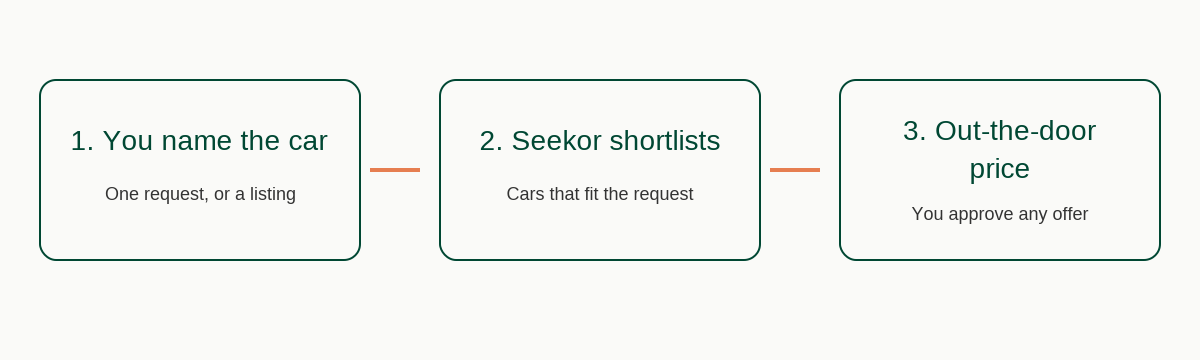
That's exactly the process Seekor runs on every deal — automated, data-driven, and built for buyers who want institutional-quality results without doing the work themselves.
What are the limits of a full used-luxury lot?
A full lot is not a sound car. More inventory means more choice and more cars that buyers have already passed over. Days on the lot tell you how long that listing has been public. They do not tell you why. The car may be mispriced, damaged, or simply a color people keep skipping.
Before any offer, the useful checks are the ones a listing title skips: whether the VIN has an open recall, whether the car is still for sale, and what the out-the-door price is once fees are in the number. Seekor asks for that out-the-door number. We do not negotiate the loan. You buy from the dealer, or you do not buy.
The figures earlier on this page are context for the market. They are not a quote for a VIN. A high-mile car, a branded title, or a car with an unresolved recall is outside the lightly used case. If only one dealer has the car you want, there is no second seller to compare. The question is then whether the out-the-door price is one you will pay.
Seekor is a buyer-side concierge. The fee is 1% of the agreed purchase price, due only if you buy. There is no retainer. If the number is wrong, the instruction is to walk away.